
Cooperation with local communities is undertaken primarily on the basis of the Social Involvement Policy. The overriding aim of all the social actions taken is to design them in such a way so that they can become vehicles of the actual support and assistance in the selected areas, in accordance with the principle of equalling opportunities and sustainable development. The parent company establishes partnerships with local governments, schools and universities, ensuring opportunities for children and youth development and for beneficiaries to gain professional experience (including, the internship programme). Additionally, it supports the development of hospital infrastructure through their renovation. The Śnieżka Group companies proactively respond to the needs of local entities and institutions, which is consistent with cooperation for respect for human rights.
Affected communities
Area management
[S3-1]
- Actual negative: the undertaking relies on water-based products for its operations, consuming large volumes of water, which affects the level of water stress and therefore limits access to water for local communities.
- Potential negative: through its solvent-based products containing potentially hazardous compounds and mixtures, the undertaking may negatively impact land quality and consumer health due to improper waste storage or the emission of these compounds into the land.
As part of Respect for Human Rights Policy, the Group undertakes to respect the rights of local communities, respecting their subjectivity, willingness to self-determination and all their legitimate rights. As part of this declaration, the Group takes appropriate actions to minimise the negative impact on local communities and the natural environment in areas where it conducts business operations, directly or indirectly, in accordance with applicable national and EU regulations.
The document does not indicate ways to prevent or limit material negative impacts. However, the Śnieżka Group understands its Respect for Human Rights Policy as due diligence to avoid violating the rights of others and actively preventing such violations. The undertaking is aware that the Group’s potential negative impact on human rights may be caused not only directly by our operations, products or services, but also as a result of the business relations it enters into. However, it did not identify indigenous peoples among the affected communities.

The Companies’ boards are responsible for implementing the Policy. When developing the document, the interests of local communities were taken into account through dialogue and on-going cooperation with local governments and schools involved in the implemented projects. The feedback obtained from them is considered when developing subsequent editions of the programmes. The policy, along with information on its incorporation of third-party standards, its availability, and remediation actions, is described in detail at the beginning of Chapter People.
So far the Group has not received any reports of such negative impacts or non-respect for human rights. Concerns can be raised via the channel described in chapter Business. Since the undertaking has not previously identified material impacts on local communities in the areas of water use and land quality, these issues have not been explicitly addressed in its policies.
[S3-2]
As the Group identified material impacts in affected communities in 2024, it has not yet developed collaborative processes to address water consumption and potential land contamination associated with product use. As part of the dialogue with stakeholders conducted for the purposes of this Sustainability Reporting, a survey was conducted addressed to, among others, the Group’s employees and local governments of the municipalities in which it conducts its production activities. The respondents could point out negative environmental impacts in the survey.

The management boards of individual Group companies are responsible for cooperation with the affected communities.
[S3-3]
The Śnieżka Group undertakes to take remediation actions in the case of a violation (directly or indirectly) of human rights provided for in the international, generally binding documents by any of the Group companies. To date, the undertaking has not identified any actual material negative impacts in the affected communities and has therefore not implemented remediation actions. The channels through which stakeholders, including local communities, can raise concerns, together with information on whistleblower protection, are described above and in chapter Business. The undertaking did not assess how aware the affected communities were of the existing means of communication or how trustworthy they were.
[S3-4]
Due to the nature of its operations in this area, the undertaking has not applied all of the disclosures resulting from the MDR-A. To date, there have been no detailed analyses of the impact on communities in the value chain, nor have there been any actions taken in the context of affected communities. In this respect, the undertaking initiates cooperation between business and education. For many years, Śnieżka SA has been running projects involving children from primary schools in the Dębica district, where the Group’s key plants are located. Education covers, inter alia, issues related to saving resources, including water.
However, the actions described in chapter Environment in terms of limiting water withdrawal and reducing pollution (including soil) minimise the identified material potential negative impacts on affected communities. In the coming years, the Group is to examine both issues in terms of their impact on people and consider the feasibility of introducing additional mitigation measures. No serious human rights issues or incidents involving affected communities were reported.
- Colour – social projects and other forms of the undertaking’s engagement revolve around its mission, which is: “We Believe Colours Matter.” and close to its vision, which is defined by the following: “We want to inspire with colours, create space, build emotions.” Translating the mission and vision into the language of social action denotes inspiration, joy and change for the better – both in the sense of interior renovation and the implementation of other activities with a positive social impact.
- Local community – the Group companies are engaged in crucial activities from the perspective of the inhabitants of their local communities. Also, Śnieżka carries out activities throughout the country, addressed to public entities located in small towns or in areas at risk of social exclusion (which expresses the attachment to localness also on a national scale).
- Children and youth – the primary beneficiaries of the Group’s social actions are children and youth including their families and immediate milieu. Their support is rendered predominantly in cooperation with, or intermediated by, public bodies.
Śnieżka's flagship programmes to support local communities in this regard, both nationally and locally, are:
A programme for comprehensive renovation and painting of hospital wards (in Poland, Ukraine and Hungary), which translates into improved treatment conditions for patients and the comfort of work of medical staff.
(by the Śnieżka Foundation) – a project addressed to fourth-grade students of primary schools; during five 90-minute workshops, issues related to economics, entrepreneurship and pro-social and pro-environmental activities are presented.
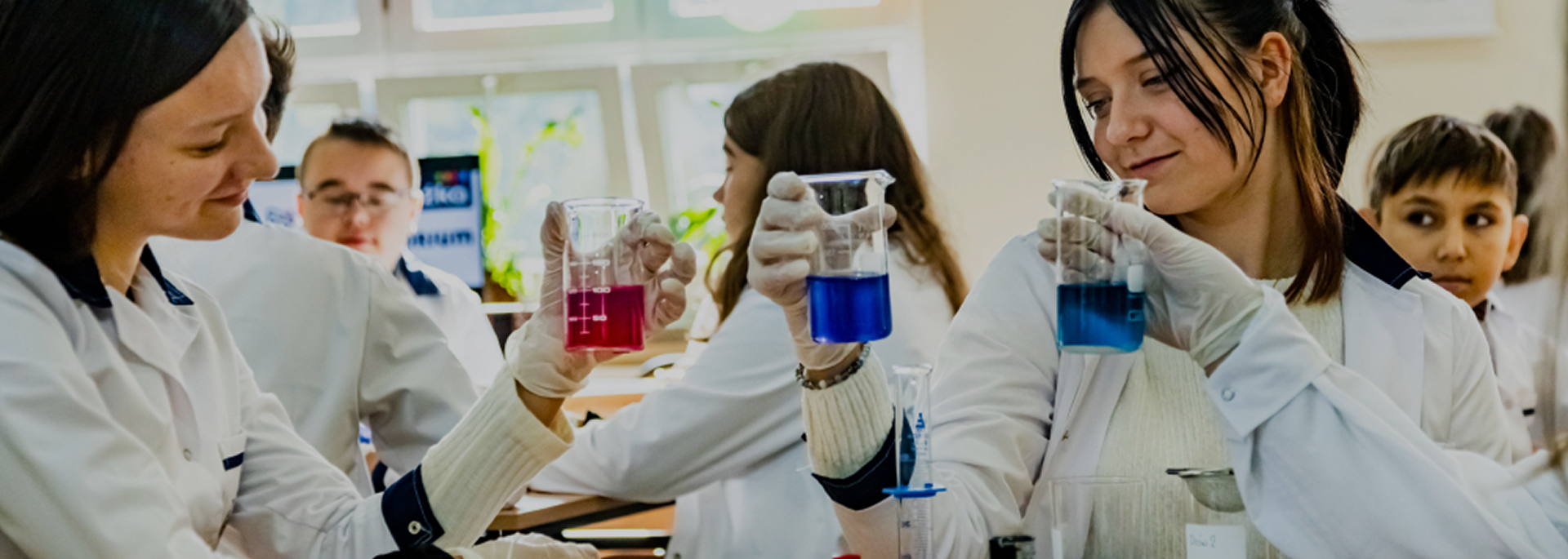
(a project run by FFIL Śnieżka SA) – a propriatory nationwide social project for primary schools in towns with a population of up to 20k residents. The aim of the initiative is to popularise chemistry among students of grades 4-8 – a field in which Śnieżka specializes as a paint manufacturer.
Targets related to affected communities
[S3-5]
Due to the nature of its activities in this area, the company has not applied all the disclosures required by the minimum disclosure requirement for monitoring the effectiveness of policies and activities using targets (MDR-T). The nature of the material impacts allows the targets in their area to be considered as being identical to those related to water and land pollution, as being in the interests of affected communities. The Group will, however, monitor the appropriateness of establishing separate targets in this area.
Members of the local communities, who were employees of the Group, were involved in developing the original assumptions of the Sustainable Development Strategy, which included the above environmental objectives. Stakeholders can read about progress towards achieving the objectives in the non-financial reports (currently known as Sustainability Reporting) published annually on the Group’s website, but they are not involved in identifying conclusions or improvements that result from the data presented in the statements.