Area management

[G1-1]

The undertaking establishes, develops, promotes and evaluates its corporate culture, taking into account the Code of Ethics and the Anti-Corruption Policy. In order to effectively manage this area, other documents have also been adopted, responding to the needs of individual Group companies.

Key documents related to the area of corporate culture adopted in individual companies of the Śnieżka Group

Śnieżka SA Śnieżka ToC Rafil Poli-Farbe Śnieżka-Ukraina Śnieżka- BelPol
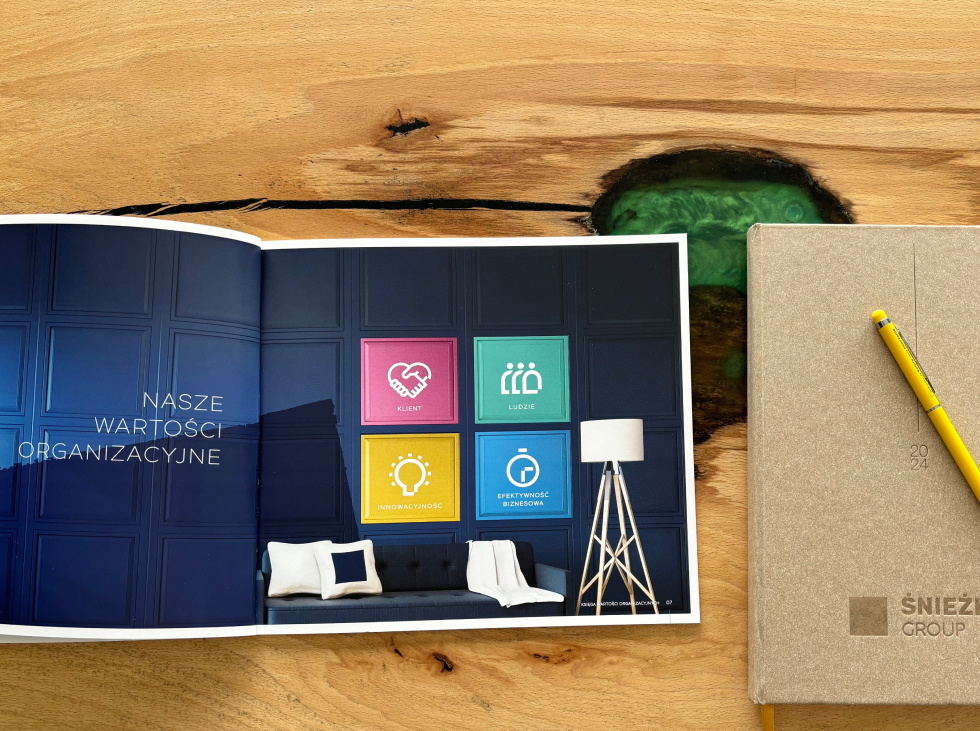
Book of Organizational Values
Code of Ethics
Anti-corruption policy
Supplier’s Code of Conduct
Procurement Policy
The internal reporting procedure
Report handling procedure


The above documents are publicly available on the Group’s website and on its ESG reporting platform.

In Śnieżka SA and Śnieżka ToC companies, the documents in question are published in the internal system supporting corporate documentation management. After receiving an email notification about the regulation coming into force, employees will review and confirm that they have read it in the system. Line workers are familiarised with the regulation by their superiors. In 2025, Śnieżka-Ukraina and Poli-Farbe companies are planning to implement a corporate documentation management system in which all internal regulations will be published.

The undertaking has not adopted a training policy regarding the above documents. They are conducted in accordance with the needs of each company (e.g. during the onboarding process), considering positions for which given regulations are particularly important (discussed later in the chapter).

The Management Board of Śnieżka SA and the individual Management Boards of the companies in which the documents have been adopted are responsible for implementing the policies, unless otherwise indicated.

The Book of Organizational Values

It describes the principles, behaviours and attitudes expected from the Śnieżka Group’s employees, related to ethical behaviour, norms of social coexistence and respect and dignity. It also includes the mission and vision of the undertaking.

  • Key values

      • Customer – understanding the customer’s perspective and providing optimal products and services.
      • People – creating a culture of commitment and responsibility by building a climate of cooperation and development in a safe work environment.
      • Innovation – constant search and implementation of new (digital) solutions and better ways of doing things.
      • Business efficiency – standardization of activities, rational management of resources and decision-making based on data and facts, taking into account a strategic perspective.

The Code of Ethics

The Code of Ethics defines the standards of conduct addressed to all employees of the Śnieżka Group, regardless of their position, working time, time and place of work, or the type of tasks performed. It is based on the values ​​of the undertaking and refers to policies and other documents defining areas related to ethics in a broad sense. Its task is to facilitate making the right choices by indicating ethical patterns and norms that are key in business activities.

Areas regulated in the Code of Ethics and related documents

Area Internal regulations detailing selected issues
Employee relationships
employee health and safety HR Policy, Quality, Environmental and Health and Safety Policy
a friendly workplace HR Policy
counteracting discrimination and mobbing Diversity Policy, Regulations for Counteracting Mobbing, Discrimination and Harassment
forced labour, child labour and freedom of assembly Respect for Human Rights Policy
Environment relations
relations with suppliers Procurement Policy, Supplier’s Code of Conduct
Customer relationships
relations with local community Social involvement policy
Natural environment Quality, Environmental and Health and Safety Policy, Climate Policy
Corporate governance and ethics
counteracting corruption Anti-corruption policy
a conflict of interest Anti-corruption policy
responsible communication Information Policy
protection of data and confidential information Information Policy, Digital Security Policy, Personal Data Protection Policy
Raising concerns
Channels for raising concerns Internal Reporting Procedure, Report handling procedure
Whistleblower protection Internal Reporting Procedure

The Code of Ethics and the principles and standards of conduct described therein apply to the entire Śnieżka Group. The document is available on the website of the Group at sniezkagroup.com, in the internal system supporting the management of corporate documentation and at the line manager.

Anti-Corruption Policy Of The Śnieżka Group

This document relates to topics identified in the dual materiality assessment in the area of ​​business conduct. The Group has identified the following as crucial:

  • a potential negative impact on employees due to the lack of active communication of existing channels for reporting unethical behaviour,
  • a risk of corruption incidents affecting reputation and trust.

The purpose of the Policy is to establish uniform principles for proceeding in the event of identified abuses, suspected identified abuses, preventing and counteracting abuses committed to the detriment of the Śnieżka Group and actions inconsistent with the principles operating in the Group, as well as ensuring the transparency of the Group’s activities towards its business partners. This document defines the principles of conduct towards economic abuse, with particular emphasis on corruption and corrupt activities.

All employees and associates of the Śnieżka Group should be fair, honest and transparent in their business activities.

In the Company, corrupt activities are defined in accordance with the relevant provisions of the Act of 6 June 1997 – the Penal Code. They are understood as, for example, giving or receiving a material or personal benefit (usually in the form of cash, a gift, a loan) by any person or their promise as an improper incentive or compensation for obtaining a benefit for themselves or for the entity they represent.

Corrupt activities are prohibited both when committed directly and through third parties, as well as when used in relations with contractors, business partners and persons holding public offices. Bribery can take place in the public sector (e.g. paying a bribe to a public official) or the private sector (e.g. giving a material gain to a contractor’s employee). It should be pointed out that not only corrupt activities are prohibited, but also any activities that are contrary to the principle of fair competition, constituting crimes or offences related to economic transactions.

  • principles of concluding contracts, including purchases,
  • internal communication (between employees) and external communication (with contractors and other entities),
  • lobbing,
  • participation in competitions,
  • liabilities.

The undertaking recognises that those most at risk of corruption and bribery are those employed in the Procurement Department, as well as those involved in the selection of suppliers of services, machines and devices related to capital expenditures and the purchase of IT software and equipment.

All the Group companies have adopted an Anti-Corruption Policy in line with the United Nations Convention.

The Code of Ethics and the Anti-Corruption Policy indicate the paths through which concerns can be raised– both in Śnieżka SA and in other companies of the Group:

Both channels for raising concerns are publicly available, so any stakeholder has the opportunity to raise concerns.

Additionally, in Śnieżka SA, Śnieżka ToC, Śnieżka-Ukraina and Poli-Farbe companies, employees have the option of raising concerns via an external platform – a confidential channel for raising concerns available at the link sniezkagroup.vco.ey.com. 

In addition, in Śnieżka SA (in the case of a Member of the Management Board), concerns can be raised by letter or e-mail to the following address: zgloszenia.radanadzorcza@sniezka.com.

Raising concerns denotes providing information about observed or suspected violations, i.e. actions or omissions that are illegal or intended to circumvent the law, in particular violating or circumventing applicable internal procedures in the Śnieżka Group, including any unethical behaviour or omissions, conflict interests or corruption. They can be submitted by employees as well as contractors. The grievance mechanism and whistleblower protection are described later in this chapter.

The following documents were adopted in: Śnieżka SA, Śnieżka ToC, Poli-Farbe and Śnieżka-Ukraina: The Internal Reporting Procedure and Report handling procedure, which comprehensively regulate the system for raising concerns and conducting explanatory proceedings and follow-up actions.

The Internal Reporting Procedure contains regulations regarding the whistleblower protection, the person assisting the whistleblower and the person associated with the whistleblower – in accordance with the Whistleblower Protection Directive, as well as the Polish and Hungarian (for the Poli-Farbe company) Whistleblower Protection Act.

In accordance with the Internal Reporting Procedure:

  • Retaliatory actions are prohibited and any cases of their application are subject to disciplinary liability. Each company that has implemented the Procedure provides protection against retaliation or other types of adverse or unfair treatment.
  • The whistleblower is protected from the moment of raising a concern, submitting external report or public disclosure, provided that they had reasonable grounds to believe that the information about the violation that was the subject for raising the concern was true at the time of doing raising the concern or making public disclosure and that it constitutes information about the violation.
  • One of the measures to protect the whistleblower is to protect their identity and to protect information that could directly or indirectly help identify them.  Each company ensures that information about the whistleblower’s identity will be kept confidential and will only be disclosed with the express consent of the whistleblower in writing or by e-mail/electronically. Each person designated to receive concerns and take follow-up actions has appropriate authorisation and has signed a declaration of confidentiality under penalty of criminal liability.

In addition, Appendix 1 to the Internal Reporting Procedure includes examples of unfavourable treatment that may be considered prohibited retaliatory actions against the whistleblower. Additionally, the Employment Regulations of Śnieżka SA and Śnieżka ToC describe the principles of equal treatment of employees and the prohibition of all forms of discrimination against employees.

The team authorised to receive concerns and take follow-up actions has also been trained in conducting investigations including the whistleblower protection.

Concerns are recorded in the main register of concerns maintained on the EY VCO Platform and, in the case of Śnieżka SA, in an auxiliary register maintained by the Chairman of the Supervisory Board. They are also automatically numbered and catalogued, and the party raising a concern receives a confirmation on submitting it.  Initial verification includes checking whether the concern meets formal requirements, whether the person raising the concern has the status of the whistleblower and whether the concern contains sufficient information to initiate an investigation.

The proceedings are conducted by a team that is obliged to present the facts reliably and objectively, maintain confidentiality and properly document activities. The team is composed of the Corporate Governance Officer and the Compliance Officer (in Śnieżka ToC – Management Board). If necessary, the team leader may appoint additional persons with appropriate knowledge. The team members are obligated to maintain confidentiality and avoid conflicts of interest.

Each investigation ends with a written report that includes a description of the actions taken, conclusions and recommendations for remediation actions. The company’s management decides to implement remediation actions, which may include modifying processes, conducting training, initiating disciplinary proceedings or reporting the situation to law enforcement authorities. The concerns are taken seriously and investigated independently, objectively and confidentially to ensure high ethical standards are maintained within the Śnieżka Group.

The Śnieżka Group companies that have adopted whistleblower procedures do not plan to implement a separate whistleblower protection policy, as the principles of whistleblower protection are regulated in the Internal Reporting Procedure.


Supplier's Code of Conduct

The Śnieżka Group operates on the basis of a clearly defined set of organizational values.  They are also the basis for activities related to the supervision of the supply chain and building long-lasting rapport with suppliers.

The overriding objective of the Group is to do business with partners who understand and share the concern for sustainable development, and in their activities they aim at developing their practices in areas in which the Śnieżka Group also sets itself ambitious objectives. The Supplier’s Code of Conduct contains a set of principles that should be followed by every Partner collaborating with the Group.

The observance of them should form the basis of joint business relations. Confirmation of knowledge and compliance with the principles of the code is a requirement for cooperation with the undertaking.  Suppliers are obliged to sign the Acknowledgment of the Supplier’s Code of Conduct, thus declaring their readiness to undertake ethical business activities. In 2024, the Supplier’s Code of Conduct was implemented in the following companies: Sniezka-Ukraina, Poli-Farbe, Rafil, and in the Sniezka-BelPol company in January 2025.

The entity supervising compliance with the Supplier’s Code of Conduct is the management body of each Śnieżka Group company.

  • environment, climate and sustainable development protection,
  • respect for human and employee rights,
  • occupational health and safety,
  • social involvement,
  • corporate governance and legal compliance.

The document applies to suppliers of goods and services, sellers, contractors, subcontractors, intermediaries, consultants, agents who liaise with entities of the Śnieżka Group.  Śnieżka expects each of them to ensure that the practices and policies described therein are passed on to all of its employees and subcontractors.  Suppliers who have their own procedures that meet the same standard of care for sustainable development, i.e. primarily human rights, employee rights, environment and corporate governance, are exempted from the obligation to provide information about practices and principles to their subcontractors. The Code is binding for all suppliers of the Group irrespective of the type of activity, the manner of orders execution, the area of business or cultural differences.

The Śnieżka Group reserves the right to verify whether its direct suppliers comply with the principles set out in the Code in question.  This verification may be carried out in various ways, such as self-assessment surveys or audits at the supplier’s facilities, with sufficient advance notice. Since 2023 the verification of Śnieżka SA’s suppliers has been carried out through a self-assessment survey. 65 strategic and key suppliers of Śnieżka SA had been invited to complete the self-assessment survey, and 37 did it so. In 2025, it is planned to implement supplier self-assessment in subsidiaries.

Procurement Policy

The Procurement Policy systematizes the purchasing activities of the Śnieżka Group in terms of acquiring suppliers who meet expectations in the process of delivering the highest quality materials, goods and services, while using innovative solutions, taking into account economic and environmental aspects.

The scope of the Procurement Policy covers all expenses within the Śnieka Group in favour of external entities. Each of the companies comprising the Śnieżka Group is obliged to comply with it and the Procurement Department is a supervising body.

The document is based on the company’s organizational values, which set expectations towards all suppliers of the Śnieka Group. It also defines the main pillars in the purchasing area, and its provisions are supplemented by the Supplier’s Code of Conduct.

In accordance with the Policy, the primary objective of procurement activities is to ensure proper operation of the Group, and the procurement process itself is perceived as a key element in promoting sustainable development in the supply chain. Under the Procurement Policy, Śnieżka undertakes to purchase and use raw materials and packaging with the required certificates for the production of its products and at the same time to support initiatives regarding the application of safe raw materials and the use of recycling technologies.

  • sustainable development,
  • compliance with internal policies (including Quality, Environment and Health and Safety, Climate, Respect for Human Rights, Diversity, HR, Anti-Corruption, Information and Digital Security),
  • compliance with and fulfilment of commitments toward national requirements,
  • compliance with and fulfilment of commitments toward suppliers,
  • striving to select reliable and credible suppliers,
  • building fair and transparent rapport with suppliers,
  • periodic, reliable and transparent assessment of suppliers,
  • confidentiality, protection and data security,
  • counteracting all forms of corruption.