
5.85%
share of energy from PV systems in electricity consumption in Poli-Farbe (Hungary)
Climate Policy of the Śnieżka Group was adopted in 2022. It refers to the parent company (FFiL Śnieżka SA) and sets the directions of action for the subsidiaries comprising the Group. The Chief Executive Officer is responsible for implementing the policy.
[E1-2]
The document described defines a framework approach for managing the climate impact of the Group and its activities across the entire value chain. This approach is based on the TCFD (Task Force on Climate-Related Financial Disclosures) guidelines.
The Climate Policy of the Śnieżka Group also constitutes the foundation of the Śnieżka Sustainable Development Strategy, within which the objectives and operational measures for the undertaking’s climate actions have been defined. The Group is committed to managing climate issues based on legal requirements and scientific knowledge. It monitors and analyses data on heat and energy consumption and greenhouse gas emissions.
The scenario analyses performed by the Company identified risks and opportunities related to climate change. It should be noted, however, that the Company’s current policies do not directly address the issue of climate change adaptation, but only climate change mitigation, which also includes actions to mitigate identified risks and opportunities that will be included in the transition plan.
The Policy defines specific objectives for the first two categories of actions. The transformation towards green energy was feasible owing to the purchase of guarantees of origin (energy purchased for Polish companies comes from renewable sources). The increase in energy efficiency is achieved by launching a metering system (which enables precise monitoring of energy consumption) and replacing lighting with energy-saving ones (which contributed to reducing electricity consumption).
Detailed operational objectives are defined in the Śnieżka Sustainable Development Strategy.
One of the effects of developing the Climate Policy was the introduction of corresponding provisions in the Supplier’s Code of Conduct. These include taking action to use green technologies, initiating and/or continuing carbon footprint calculations (Scope 1, 2 and, ultimately, 3) and implementing due diligence policies across the entire value chain, including identifying environmental risks and implementing preventive procedures. The Climate Policy and Supplier’s Code of Conduct do not contain references to the downstream value chain, geographic areas or stakeholder groups that the company influences. Stakeholders were not consulted when the policy was developed and related objectives were determined.
Risks related to environmental and climate impacts and the impact of climate change on the Group have been analysed and will be incorporated into a comprehensive risk management system. As part of the dual materiality assessment conducted in 2024, two impacts, eight risks and one opportunity were identified as material (described in Chapter General Information).
[E1-3]
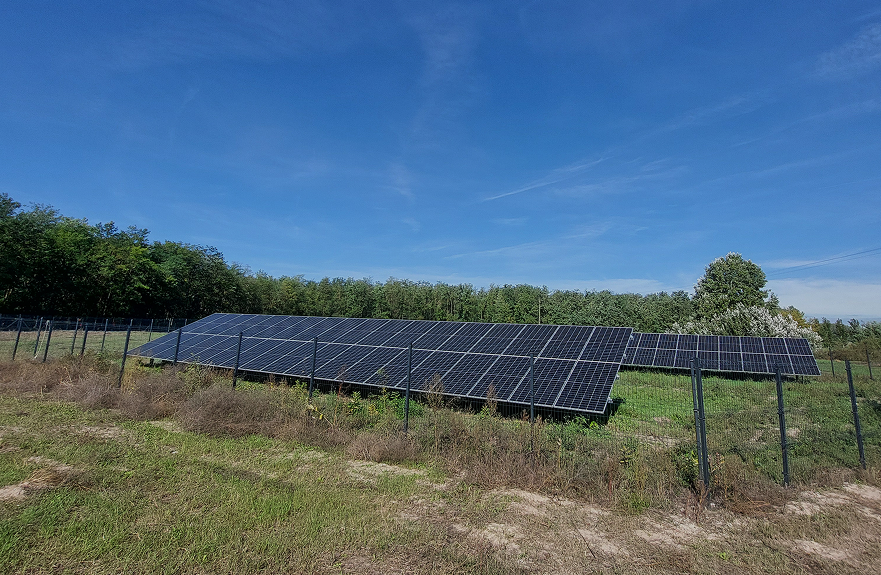
Within the dual materiality assessment, stakeholder surveys were conducted to identify potentially affected communities, as well as the locations and nature of impacts. The Group has a negative impact on climate change through greenhouse gas emissions, but a positive impact on the structure of local energy mixes through the use of renewable energy sources, including energy from its own PV systems. The assessment did not identify any actual material impacts that would require the provision of remedial actions to affected persons.
The actions resulting from the Climate Policy and the sources of their financing are described in disclosure E1-1. They are implemented within the Group’s own infrastructure, taking into account economic conditions and assumptions. The key directions of action are described in section E1-2. Individual initiatives are implemented based on the assumptions of the up-to-date Śnieżka Sustainable Development Strategy. A schedule of activities beyond the horizon of the strategy will be developed in the following years.

5.85%
share of energy from PV systems in electricity consumption in Poli-Farbe (Hungary)
9.41%
share of energy from PV systems in electricity consumption in Śnieżka-Ukraina
2.53%
share of energy from PV systems in electricity consumption in the Śnieżka Group
This report is the first prepared in accordance with ESRS standards. Accordingly, the undertaking is not able to indicate plans for progress in activities or action plans disclosed in prior periods.