
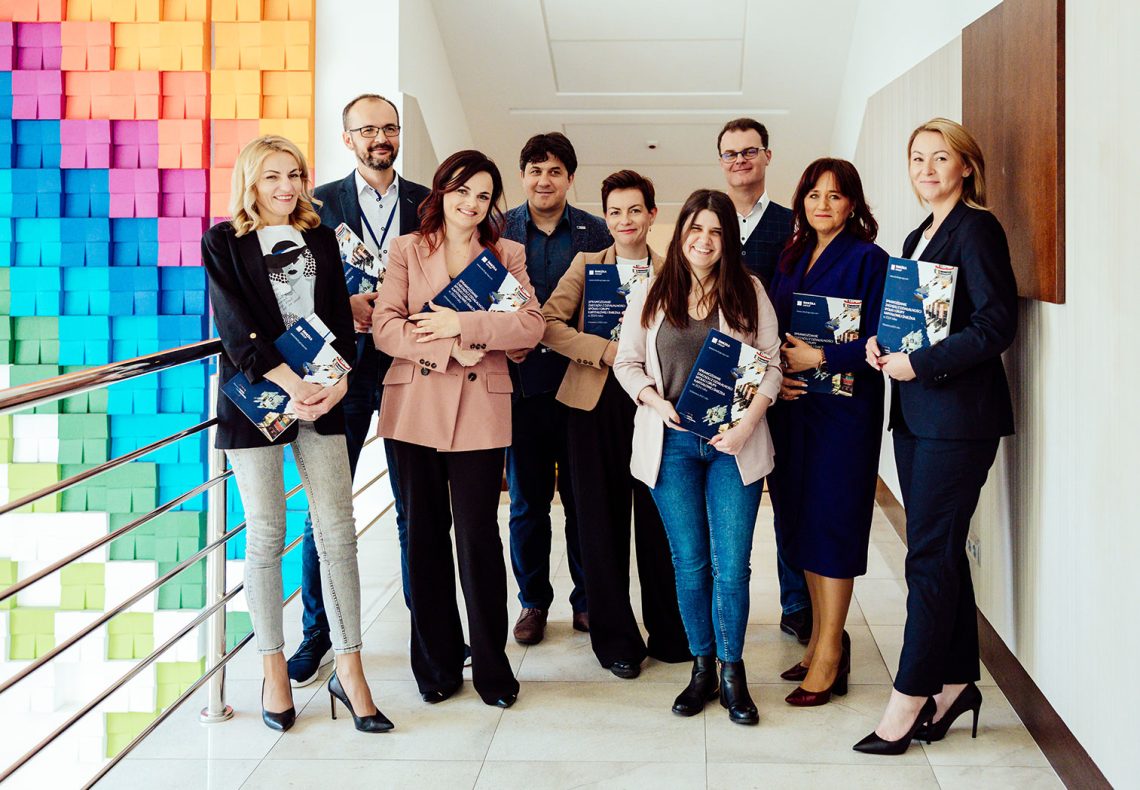
The Management Board of FFiL Śnieżka SA has appointed an internal Sustainable Development Team, consisting of top management members who represent key areas for the implementation of the Sustainable Development Strategy. It constitutes a platform for dialogue within the organisation and serves as a consultative and advisory body for the Management Board in the field of ESG activities and is responsible for implementing the objectives of the Sustainable Development Strategy and reporting non-financial data. The ESG and Corporate Communications Director is responsible for the ESG area in the Group. ESG Manager, who reports to ESG and Corporate Communications Director, manages the work of the interdisciplinary Sustainable Development Team and ensures systematic monitoring of the implementation of the above-mentioned Strategy. In addition, they ensure, manage and improve the implementation of ESG principles and are responsible for Śnieżka’s reporting on sustainable development for the purposes of preparing stock exchange reports.
Tasks and responsibilities of management bodies
It executes strategic objectives and oversees the execution of the Company’s operational objectives. Management board members perform their duties in person, in accordance with the function each time indicated by the supervisory board in the resolution on appointment to the management board.
The division of tasks between individual Members of the Management Board is specified in the Organisational Regulations of FFiL Śnieżka SA. In addition, the president of the board manages the work of the board, chairs its meetings and coordinates work of other board members.
The scope of activities of the Management Board includes conducting the Company’s affairs, managing its activities, managing its assets and representing it – with the exception of matters reserved for the competence of other bodies.
It exercises constant supervision over the activities of the Company and its Management Board, and in particular ensures compliance of the Management Board’s activities with the interests of shareholders, the good of the Company, applicable law and the Articles of Association. The principles of operation of the Supervisory Board are regulated by the provisions of generally applicable law, the Articles of Association, Resolutions of the General Meeting and the Regulations of the Supervisory Board.
Its operation, as well as the rights of shareholders and the manner of their exercise are specified in the provisions of the Commercial Companies Code and the Regulations of the General Meeting, available at the company’s website.
Sustainability Management
Each Board Member is responsible for an area of activity that covers the sustainable development topics identified during the double materiality assessment. Thanks to the knowledge, experience and resources of the organisation, they can effectively manage the identified material impacts, risks and opportunities.
[GOV-2]
The Management Board makes business decisions based on the up-to-date knowledge in the area of implementing the Sustainable Development Strategy and ESG-related activities conducted by the undertaking, thanks to regular meetings of the Steering Committee, during which, the work of the interdisciplinary Sustainable Development Team is discussed, including the results of the double materiality analysis. The progress of work on the implementation of the CSRD Directive was subject to regular oversight by the Supervisory Board during the meetings of the Audit Committee.
[GOV-3]
The amount of remuneration of Members of the Management Board of Śnieżka SA was regulated by the Remuneration Policy of Members of the Management Board and Supervisory Board of 2024.
The remuneration of the Management Board consists of fixed and variable remuneration components. The incentive scheme for Management Board Members includes variable remuneration components that may depend on all or some of the following criteria:
- financial – the financial results achieved by the Company or the Group in the period the variable remuneration component is awarded for;
- loyalty – the period of performing the function of a management board member;
- social involvement – taking into account social interests in the activities of the Company or the Group;
- environmental – taking into account in the operations of the Company or the Group its contribution to environmental protection;
- CSR – supporting the implementation activities undertaken by the Company or the Group in the area of corporate social responsibility of the Company or the Group;
- individual, covering individual qualifying elements of a management board member
The assessment of the Śnieżka Group’s performance in the area of sustainable development (including climate) has no direct impact on the remuneration of the Management Board Members. The Śnieżka Group has not set financial targets linked to the sustainable development goals. The Group is, however, considering introducing a financial component dependent on the achievement of sustainable development goals as part of the remuneration.
[GOV-5]
To ensure readiness for new regulations regarding non-financial reporting, Śnieżka Group introduced the Sustain and Grow project (CSRD Implementation), which at key stages engaged over 50 staff from various areas of the company (including members of the interdisciplinary Sustainable Development Team). The project progress was periodically monitored at biweekly meetings with the Management Board and regularly reviewed by the Audit Committee. Support in the project was provided by external partners (consultants and law firm) specializing in the ESG area. The project data were collected in a dedicated cloud tool, and access to individual files was granted to precisely defined project members, previously trained in the field of ESRS metrics. The data were transferred for internal processing and consultation with the advisor via a dedicated IT system, and the process of aggregation and verification was managed by the persons responsible for carrying out the project. Each indicator had an individual designation and, after being developed by a given project participant, was then verified and confirmed by the owner of a given area assigned in the project.
Consequently, the verification of data resulting from individual metrics was formally confirmed. The system also ensured monitoring of the timeliness of individual stages of work and their archiving. The next step on the advisor’s side included re-verification of the compliance of the data prepared by the Group with the ESRS standards, consultations with the Group employees accountable for the project and individual disclosures and preparation of the report content. The submitted report content was subject to re-verification by the project team.
The issues identified as material risks are reflected in the Sustainable Development Strategy adopted. Therefore, its implementation, considering strategic and operational goals and the assignment of responsibilities to positions, supports the management of material risks related to sustainable development.
The calculation methodology for the financial materiality of the examined topics (which may be later reported as material) was based on the calculation methodology for the business risks identified at that time in the organisation. ESG risks identified during the double-materiality assessment will be incorporated into the enterprise risk management system. A list of material sustainability-related risks can be found later in this chapter.