
3.27%
adjusted pay gap for Śnieżka SA and Śnieżka ToC in 2024
[S1-4]
The Śnieżka Group undertakes a number of activities to positively influence employees and manage potential negative impacts, risks and opportunities related to employment. These initiatives are a follow-up of the activities that implement the Sustainable Development Strategy and were defined during the double materiality assessment.
Additionally, the Śnieżka Group verifies their effectiveness based on the results of the eNPS survey and interviews with workers’ representatives. Double materiality assessment confirmed the validity of the chosen directions.
[S1-16]
In its HR Policy, the Śnieżka Group is committed to building an effective and transparent remuneration policy. It implements this commitment by precisely defining the roles and responsibilities of individual departments and positions, which not only supports the expected process improvements but also provides a foundation for further development and motivational initiatives. The Group systematically evaluates positions, monitors salary levels relative to the market and analyses the salary gap, ensuring equality and competitiveness of the salaries offered. No end date has been set for the above-mentioned activities.
| 2024 | 2023 | |
|---|---|---|
| The gender pay gap, defined as the difference in the average pay between female and male employees, expressed as a percentage of the average pay of male workers (taking into account the gross hourly pay level of all workers) | -3.51% | -11.27% |
| The annual total remuneration of the highest paid individual towards median annual total remuneration of all employees (excluding the highest paid individual) | 16.51* | 19.96* |
For comparative purposes, the data for 2023 have been recalculated since this indicator did not include the annual bonus due (the part of the bonus that had not been paid as of the date of publication of the report). The value in the Management Board’s Report on Activities for 2023 was 18.81.
The unadjusted pay gap was calculated as the percentage difference in average gross hourly pay level of female and male employees. The total annual gross remuneration was used for the calculation, covering all salary components, including variable elements such as bonuses, overtime, allowances and other financial benefits. The calculation covers all employees of the undertaking.

3.27%
adjusted pay gap for Śnieżka SA and Śnieżka ToC in 2024
The adjusted pay gap was calculated as a weighted average of the unadjusted pay gaps across job grades, with the absolute value of the gender pay gap used for each job grade. This approach allows for an assessment of the overall scale of pay gaps within an undertaking, regardless of which gender is better paid at a given job level. In this way, the indicator reflects the overall level of pay inequality, eliminating the effect of cancelling out positive and negative pay differences.
The calculations were made based on base salary since it is a key element of the undertaking’s remuneration policy and is not dependent on individual factors such as overtime, bonuses or allowances for working under specific conditions. Consequently, the result obtained reflects systemic pay differences resulting from the employer’s decisions, and not differences resulting from the professional activity of employees.
The Śnieżka Group ensures security and stability of employment on a continuous and indefinite basis, providing employees with transparent working conditions, clear goals and access to information on the direction of the undertaking’s development.
[S1-15]
| Total | Women | Men | |
|---|---|---|---|
| Percentage of employees entitled to family leave | 100% | 100% | 100% |
| Percentage of eligible employees who took advantage of family leave | 4.90% | 8.76% | 2.91% |
The data on parental leave comes from the HR and payroll systems operated by the companies. Reports covering absences of all employees in 2024 were generated from the above-mentioned systems, and maternity, parental and paternity leave were then filtered out from the reports.
Addressed to all employees, enables professional development through vertical or horizontal promotion, depending on the current recruitment processes. Participation in the programme provides an employee with the opportunity to take up a higher position or change their professional area, provided they meet certain criteria and successfully complete the recruitment process. Internal recruitment is conducted in all the Group companies.
Addressed to all employees, enables the development of competences by sharing knowledge and experience. It gives the opportunity to become an internal trainer, allowing experts in their fields to develop their training skills and support the development of other employees. Not only does the participation in the programme allow an employee to strengthen their expert position, but also to gain valuable experience in running training and building a culture of knowledge sharing in the undertaking. The second edition was held in 2024, and the training areas were grouped into 4 categories: Business Tools, Business, Communication and Health Promotion/Wellbeing. The programme is implemented in the following companies: FFiL Śnieżka SA and Śnieżka ToC.
Aimed at all employees, enabling the development of competences in a selected area. The programme allows an employee to use 2 hours per month for any course, training, webinar or book reading, and all of these activities take place during working hours. The initiative supports a culture of continuous learning and gives employees space for professional and personal development. The activity is implemented in the following companies: FFiL Śnieżka SA and Śnieżka ToC.
The company provides inspiration through a corporate library and a dedicated educational platform containing a wide selection of educational business materials. Thanks to this, employees have constant access to the current knowledge and tools supporting their development and effectiveness. The corporate library operates in the following companies: FFiL Śnieżka SA and Śnieżka ToC. Educational platforms are available in the following companies: FFiL Śnieżka SA, Śnieżka ToC, Śnieżka-Ukraina and Poli-Farbe.
Every new employee at Śnieżka SA, Śnieżka ToC, Śnieżka-Ukraina and Poli-Farbe undergoes an onboarding process during the first two weeks of work. During this time, they learn about the rules of operation of the undertaking, receive equipment and tools necessary for their position, and access to the training platform with assigned training (including a system for reporting violations, anti-mobbing training, cybersecurity, product training, and others). The employee also attends training related to organisational values, benefits, initial and on-the-job occupational health and safety training, and participates in meetings with the superior during which an Individual Adaptation Plan is developed. The plan includes goals for a 3- or 6-month period, depending on the position level. The aim of the onboarding and adaptation process is effective implementation at the workplace and familiarization with the organizational culture. In 2024, 87 employees participated in the onboarding and adaptation process, which represents 100% of the employees in the above Group companies.
Complement the standard training offer by providing personalized development solutions. These programmes include, inter alia, the development of managerial competences (Śnieżka SA, Śnieżka ToC) and support for sales, sales-related and language skills (in all the Group companies), project management and problem-solving (Design Thinking, Problem Solving in FFiL Śnieżka SA and Śnieżka ToC). Each of them is created based on a detailed analysis of the needs of both the participants and the undertaking, which ensures their maximum effectiveness and alignment with the strategic goals of the undertaking.
Appraisal is carried out on a monthly, quarterly and annual basis, which allows for on-going monitoring of progress and achievements. Additionally, at Śnieżka SA and Śnieżka ToC, employees discuss the level of goal achievement with their line manager once a week during so-called board meetings. These meetings also provide an opportunity to discuss the undertaking’s values, strategy, mission and vision, strengthening commitment and alignment of activities with strategic goals.
Employees are involved in project activities within their competences, which allows for building a broad perspective, exchanging knowledge, collaborating with various teams and developing analytical and leadership skills.
[S1-13]
| Percentage of employees participating in regular performance and career development reviews (%) | Average training hours per employee | |
|---|---|---|
| Women | 91 | 35.79 |
| Men | 100 | 19.80 |
| Total | 97 | 25.22 |
All employees are subject to regular performance reviews, the frequency of which depends on the position held. The performance is reviewed in internal systems. The indicator was calculated excluding absent employees for a long time due to maternity leave.
The Group ensures that all employees participate in mandatory training – provided for by regulations and necessary to hold a given position.
In addition to mandatory training, employees can also benefit from voluntary training (internal and external) that develops professional competences, which are described above.
The data for calculating the average number of training hours per employee are obtained from internal systems. This indicator does not include mandatory OHS training.

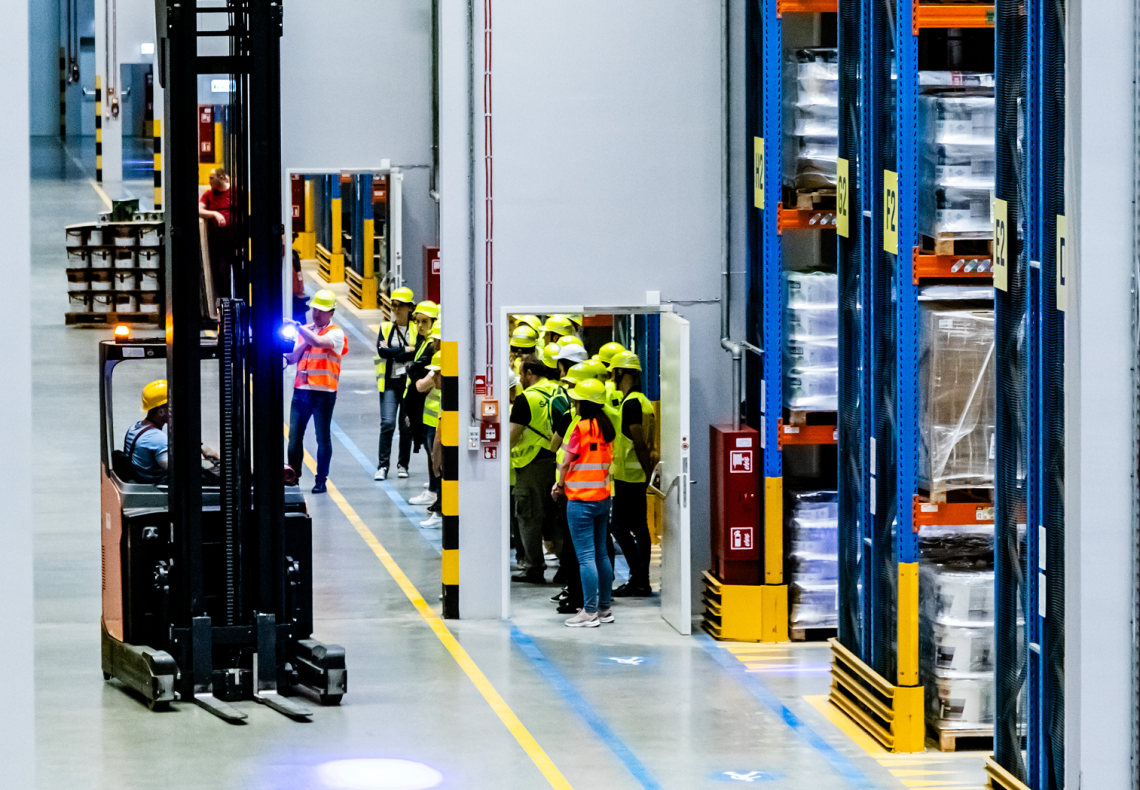
The above actions are intended to minimise the risk of serious and fatal accidents and occupational diseases, as well as to ensure compliance with applicable OHS regulations and standards.
An Occupational Health and Safety Committee, a Fire and Technical Committee and an Inspection Team operate in Śnieżka SA and Śnieżka ToC. The committees review designated areas according to their areas of responsibility. At the end of the review, conclusions are formulated, which after being assessed by an expert, are implemented in accordance with the assigned priority.
In order to improve work safety and ergonomics, instructions were put in place regarding the option to report by employees applications and identified cases of occurring hazards and potentially dangerous situations. Employees also have the possibility to submit anonymous reports – as whistleblowers – to the Management Board or Supervisory Board. All these activities are carried out in accordance with the requirements laid down in the regulations and in line with the current needs.
In 2024, no serious or fatal accidents were recorded in the Group, and therefore no remediation actions were taken.
[S1-14]
| 2024 | 2023 | |
|---|---|---|
| Number of work-related accidents of own workforce | 4 | 7 |
| Number of fatalities due to work-related injuries and illnesses in relation to: | ||
| own workforce | 0 | 0 |
| non-employees | 0 | 0 |
| Number of cases of work-related ill health in relation to: | ||
| own workforce | 0 | 0 |
| former own workforce | 0 | 0 |
| non-employees | 0 | nd* |
| Work-related accident metrics of own workforce: | ||
| Lost Time Incident Rate (LTI) | 2.08 | 5.16 |
| Lost Time Severity Incident Rate (LTI) | 0.13 | 0.27 |
| Number of days lost due to work-related injuries and work-related fatalities, work-related ill health and health-related fatalities in relation to: | ||
| own workforce, including non-employees | 251 | 365 |
100% of own workforce in 2023-2024 were covered by an occupational health and safety management system based on legal requirements and/or recognised standards or guidelines (including internal audit and/or audit or certification by an external entity).
In both 2024 and 2023, there were no reported fatalities due to work-related injuries and illnesses. Data on non-employees were collected from 2024 onwards.
Data on accidents and accident rates are sourced from internal records and human resources management systems.

[S1-10]
Following the remuneration analysis in the Group, it was confirmed that all employees receive remuneration above the established reference indicators, which represent the national minimum wages. The results confirm the compliance of the Remuneration Policy with the principles of fair remuneration and the commitment to ensuring decent working conditions.
The Group focuses on creating an innovative and effective work environment, taking into account diversity among the management staff, through the following activities:
Additional examinations in 2024 included two groups:
The documents implemented within the Group regulate the principles that reduce the likelihood of a negative impact on the undertaking’s employees (its own workforce) due to the practices it undertakes.
The HR/People and Occupational Health and Safety departments in individual companies are responsible for monitoring impacts and related activities, the implementation of which is based on the regulations adopted within the Group, including the policies indicated at the beginning of this chapter.